

Dear GREENPORT Alliances community,
Welcome to our latest newsletter, bringing together updates on international mobility, hands‑on learning, new research, and policy discussions shaping the future of sustainable maritime operations.
Nikola Vaptsarov Naval Academy’s visit to Klaipėda, Lithuania
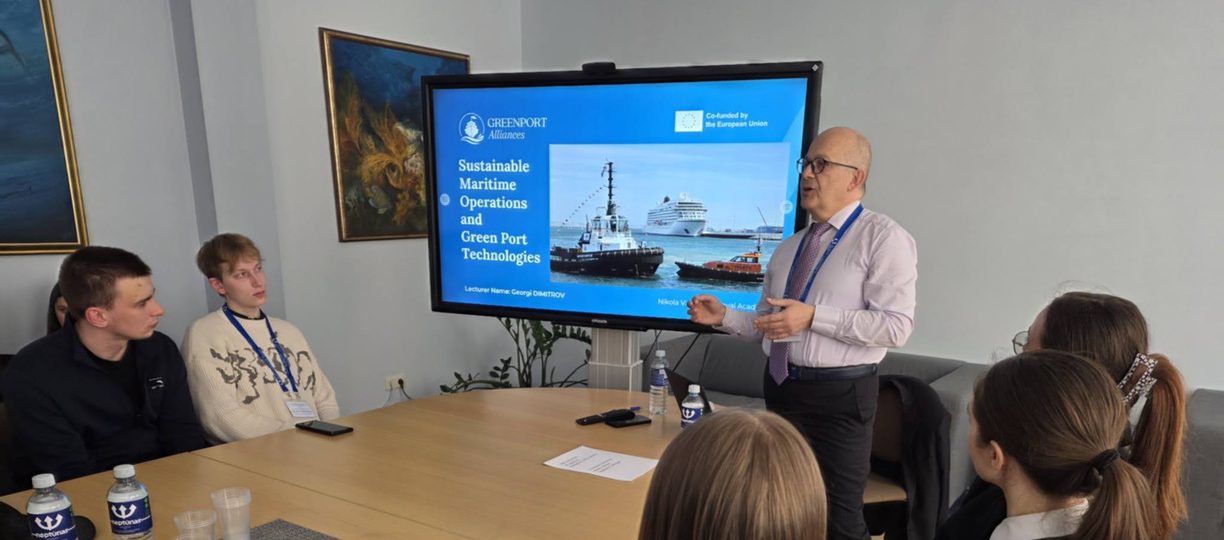
From 13–17 April 2026, representatives of Nikola Vaptsarov Naval Academy took part in an Erasmus+ staff week in Klaipėda, Lithuania, combining academic exchange, networking and dissemination of results linked to the GREENPORT initiative. The visit offered a valuable opportunity to present current research, share best practices in maritime education and strengthen cooperation with international partners involved in the transition to more sustainable maritime operations.
A key moment was participation in the international conference “Maritime, Offshore Energy and Port Logistics (MOEPL 2026)” on 16 April, which brought together academia, industry and institutions from across Europe to discuss maritime transport, offshore energy, port logistics, decarbonisation, digitalisation and future skills — themes closely aligned with GREENPORT’s objectives on sustainability, innovation and the human dimension of port‑related transformation.
The Erasmus+ week also included three Logistics students from the academy, broadening its international academic presence. Assoc. Prof. Georgi Dimitrov and Capt. Assist. Prof. Mihail Gachevski delivered lectures on emission reduction in port regions and the use of alternative fuels in shipping, reinforcing the dissemination of GREENPORT‑relevant knowledge through education, practice and policy dialogue.
Learning Beyond the Classroom with Piri Reis University
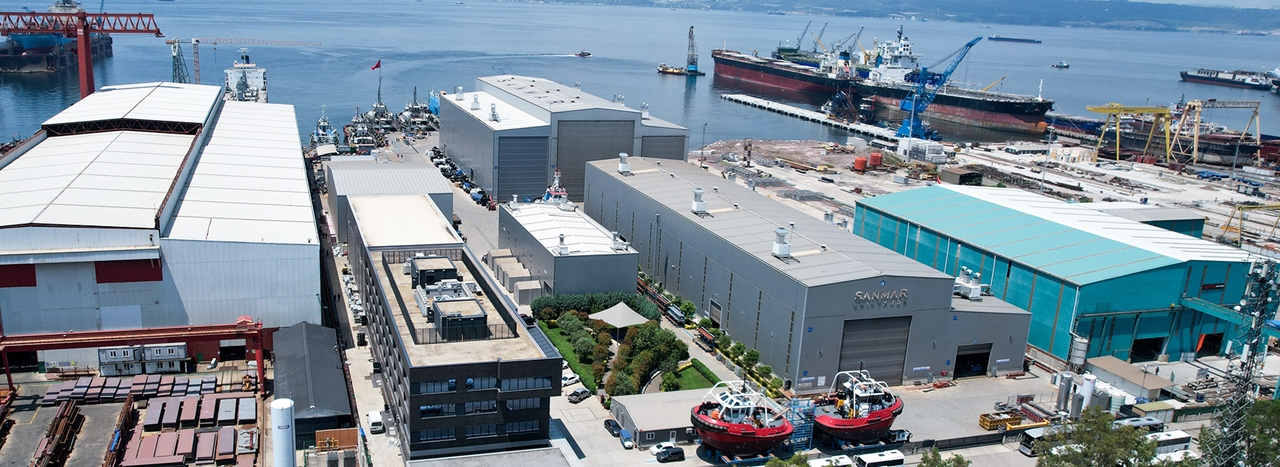
Students from Piri Reis University took learning beyond the classroom with a technical visit to Sanmar Altınova Shipyard as part of the Sustainable Maritime Operations and Greenport course, which continues its pilot phase this spring semester.
During the visit, students witnessed the launch of a tugboat and had the unique opportunity to observe the world’s first methanol-powered tug up close — an important milestone in the maritime industry’s transition toward cleaner energy.
Through this hands-on experience, they gained valuable insights into:
• Sustainable shipbuilding practices and alternative fuels
• Real-world applications of decarbonization strategies in maritime transport
• The critical role of innovation in achieving greener ports and shipping operations
We sincerely thank Sanmar Shipyard, and especially İpek Gürün, for their generous support and for making this inspiring experience possible.
GREENPORT’s study titled “A COM-B Perspective on Integrating Sustainability into Maritime Education” accepted for publication
A new study titled “A COM‑B Perspective on Integrating Sustainability into Maritime Education”, jointly developed by Piri Reis University, Constanta Maritime University and the University of Rijeka, has been accepted for publication in the Scientific Journal of Maritime Research (POMORSTVO) and will appear in its June 2026 issue.
Responding to the urgent need for decarbonisation in an industry responsible for over 80% of global transport and around 3% of global greenhouse gas emissions, the article examines how sustainability can be better embedded into Maritime Education and Training (MET). It finds that while educators are highly motivated to include sustainability and behavioural change in their teaching, they often lack capability (training and resources) and opportunity (access to real‑world cases and interactive learning environments).
The study underlines the key role of educators in shaping sustainable mindsets and practices among future maritime professionals and offers practical insights to support greener, more resilient port and shipping operations.
European Maritime Pilots Association’s meeting in Ghent
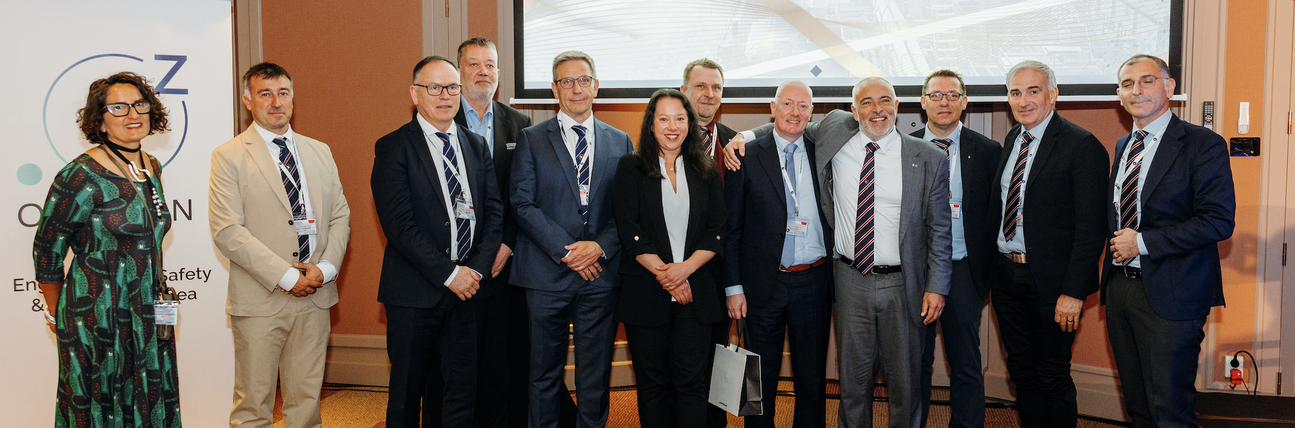
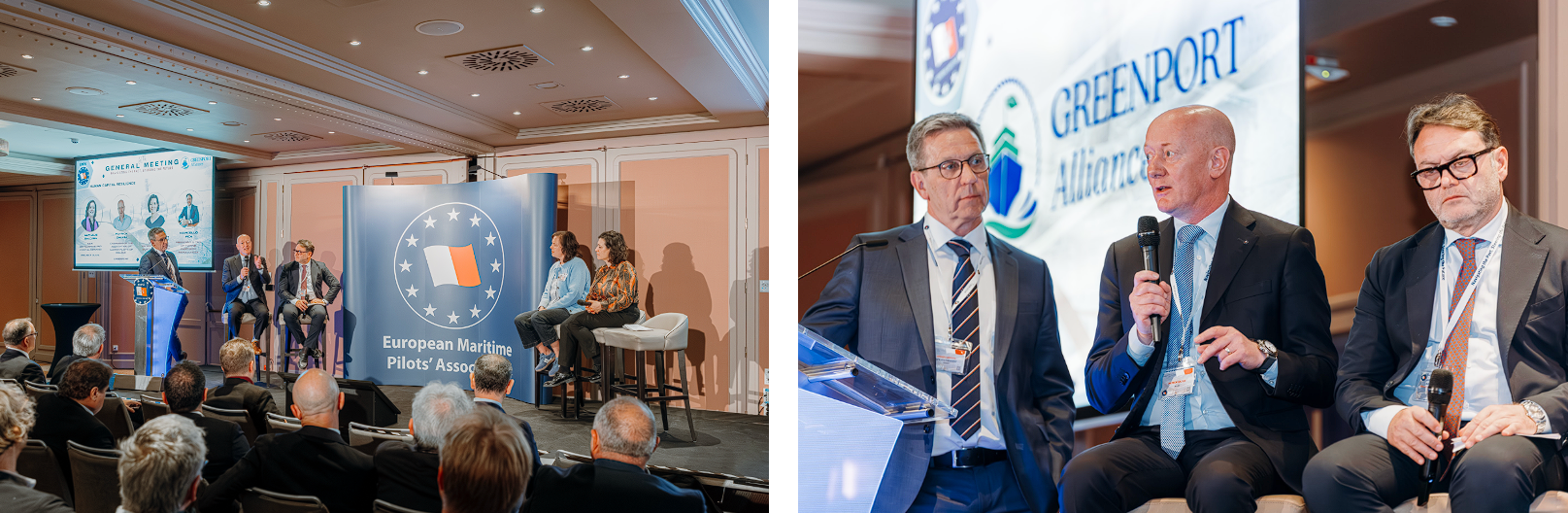
GREENPORT Alliance was featured at the 60th European Maritime Pilots Association (EMPA) meeting in a panel titled “Human Capital Resilience.” EMPA representative Patrick Galvin highlighted how behavioural change and the role of people are untapped resources for decarbonisation.
He outlined the GREENPORT project, its progress so far, and stressed that maritime professionals can already act to cut emissions — without waiting for new technologies or fuels. His presentation sparked strong engagement, with many of the 140 attendees, mainly pilots and industry stakeholders, asking questions and signalling clear interest.
The discussion reinforced that people will remain central to the maritime sector and that policy must be people‑centric, treating technology and future fuels as supportive, not primary. The meeting ended with a commitment to prioritise human capital in a rapidly changing world, recognising that true maritime resilience depends on skilled professionals in high‑quality jobs.
The takeaway was clear: putting people at the centre is essential for navigating future challenges and opportunities.
Keep following us as GREENPORT moves into an exciting new stage — where research meets real-world impact! In collaboration with our partners, we’re creating innovative educational resources to make port operations more sustainable.
From eco-navigation courses for students to hands-on training for professionals and educators, our three custom programmes are preparing the next generation of green maritime leaders.
Stay tuned — sustainability is setting sail in maritime education!
 English
  Turkish
  Romanian
  Bulgarian
  Dutch
Dutch  Croatian
  Italian
  Portuguese